
Waterlogging and Flood Damage in Cotton
Recent high rainfall events across most of the Eastern Australia has seen many cotton crops inundated with water and experiencing prolonged periods of overcast weather. The timing of the event has coincided with cotton planting up to the squaring stage where the plant is particularly susceptible to the effects of water logging. Waterlogging is a complex stress as it affects both the soil environment and crop growth.
A range of responses to this event may have eventuated from complete crop establishment failure to reductions in growth rate and yield potential. The crop impact depends on the severity (depth, water quality, flow) and length of inundation. Coupled with waterlogged soils, cloudy weather (low light) and low temperatures also impacts crop growth. Under these conditions, cotton plants are likely to cease growth (e.g. production of new nodes), and then shed squares and fruit as assimilate in the plant becomes limited.
Flooding and waterlogging can impact soil nutrient availability and plant uptake as many nutrients become deficient when the soil is saturated (low in soil oxygen (anaerobic)). In the soil the availability of nitrogen (N), iron (Fe) and zinc (Zn) are reduced, and manganese (Mn) is increased, directly affected by the decline in soil oxygen; while the uptake of N, K, P and Fe by the plants roots that are oxygen deprived is also impaired. The severity of yield loss is directly related to the number of days the plant spends in waterlogged conditions as seen in Figure 1.
It is also important to consider that following flooding or waterlogged events that there is a high probability that the soil N supply will be significantly depleted, as a result of denitrified (N loss to the atmosphere). Crop management decisions for after a flooding/waterlogged event depends on at what crop growth stage it occurred, the severity of the damage, and how quickly remedial action takes effect.

Figure 1: The influence of the number of days that cotton is waterlogged during the season on final yield. (Adapted from Hodgson, 1982).
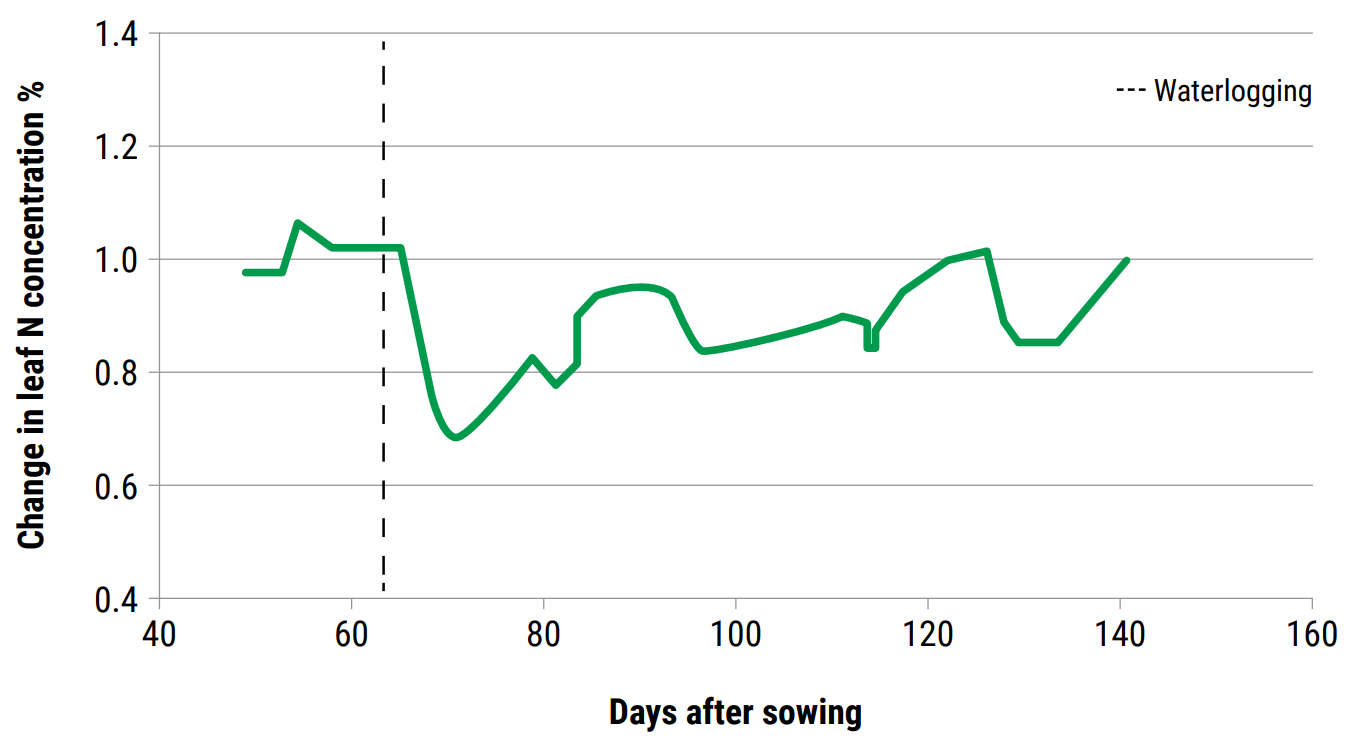
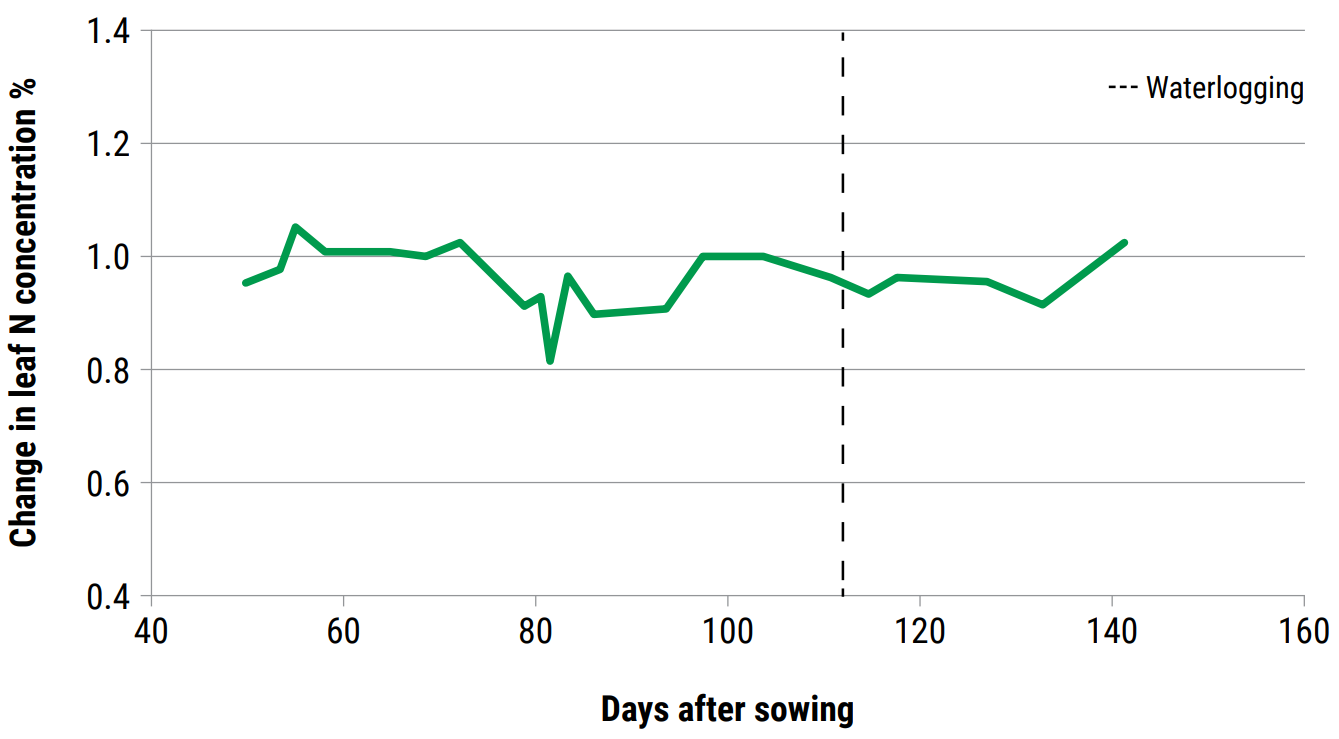
Figure 2: Impact of water logging on the N concentration of the fully expanded leaf at the top of a plant and timing of when waterlogging occurred. Post waterlogging it is important to get the crop back on track quickly, monitoring plant nutrient concentration and crop vigour are key components when light, heat and water are non-limiting, and the crop is showing signs of active growth (white roots, new leaves in the terminal bad or internode elongation). Source: WaterPak, page 281.
© Cotton Seed Distributors Ltd 2022. General guide only; not comprehensive or specific technical advice. Circumstances vary from farm to farm. To the fullest extent permitted by law, CSD expressly disclaims all liability for any loss or damage arising from reliance upon any information, statement or opinion in this document or from any errors or omissions in this document. Roundup Ready Flex®, Roundup Ready®, Bollgard II® and Bollgard® 3 are registered trademarks of Monsanto Technologies LLC, used under licence by Monsanto Australia Ltd. Insect control technology incorporated into these seeds is commercialised under a licence from Syngenta Crop Protection AG. Sicot, Sicala, Siokra and Sipima cotton varieties are a result of a joint venture research program, Cotton Breeding Australia, conducted by CSIRO and Cotton Seed Distributors Ltd (CSD). CSD is a partner in the CottonInfo joint venture, in partnership with Cotton Research Development Corporation and Cotton Australia.