
Watching out for Wilt
As the cotton crops progress through their flowering and boll fill stage and onto end of season it is important to be on the lookout for disease. This season has seen above average rainfall conditions across many cotton growing areas which can create ideal conditions for wilt pathogens to thrive.
COTTON WILT DISEASES INCLUDE:
- Fusarium wilt
- Verticillium wilt
- Sudden wilt
- Reoccurring wilt
FUSAIRUM WILT
Fusarium wilt symptoms can appear in crop any time during the season though wet conditions coupled with cooler temperatures will promote the incidence of the disease. In the field plants will show stunting along with yellow or brown leaves and most commonly occurs near the tail drain or areas that experience waterlogging. If the pathogen has penetrated the vascular tissue a solid brown discolouration occurs. This differs from Verticillium speckled pattern. CSD currently undertakes F-Rank trials to
evaluate resistance in the Bollgard® 3 varieties.
VERTICILLIUM WILT
Verticillium usually occurs in crops later in the season as the crop matures and after a cool and/wet change. CSD also conducts V-Rank trials of its current varieties to establish their V-Ranks and there are ongoing trials to help evaluate management strategies.
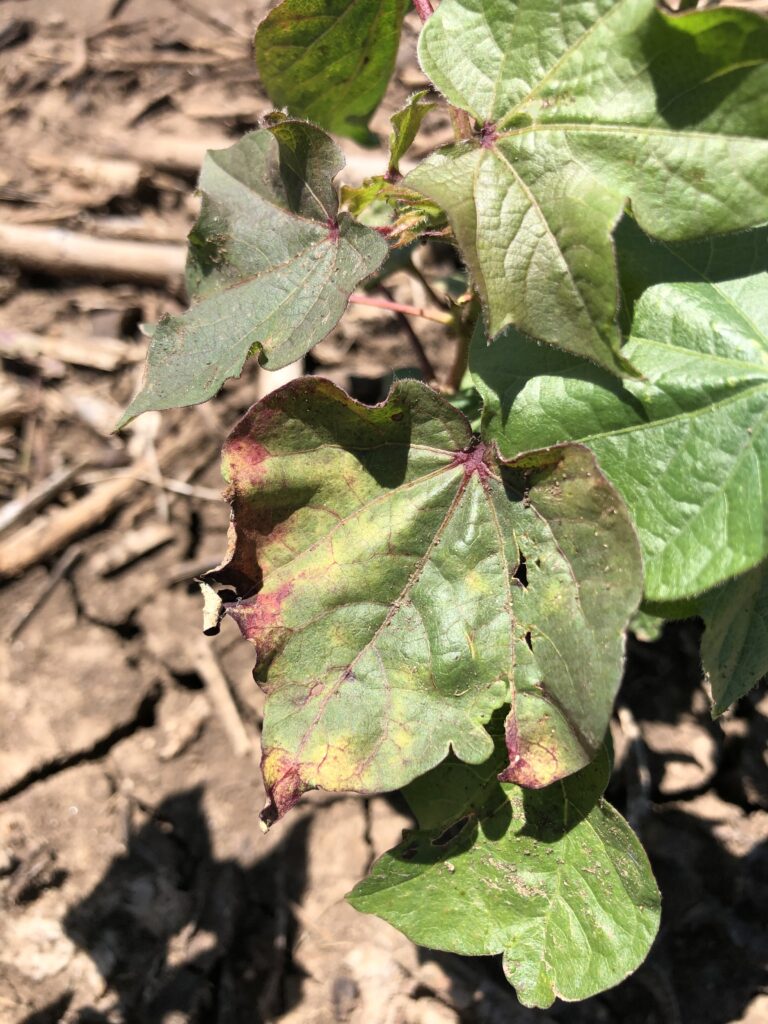
SUDDEN WILT
Sudden wilt mostly occurs during hot weather following irrigation or rainfall. You will observe a “sudden wilt”, followed by defoliation and plant death (occasionally it may regrow). Vascular discolouration is only observed in the woody parts of the root and lower stem. It occurs randomly within a field, affecting single plants or small patches of plants.
REOCCURRING WILT
Reoccurring wilt is currently being investigated as a potential new pathogen effecting cotton plants. The actual pathogen causing reoccurring wilt is currently unknown, as are the conditions that favour its spread. Occurrences are categorised by the sudden wilting of the plant, bronzing of the leaves and petiole, after dying leaves usually remain on the stem. Dead plants have blackened stems. The root system particularly in younger plants show reddening that may spread into the vascular tissue. Investigations into the pathogen along with its mode of spread are currently being investigated by the cotton industry pathologists, Dr Linda Smith, QDAF and Dr Duy Le, NSW DPI.

Its always best to get a formal identification of the wilt disease to the ensure best way to manage. If you have plants showing symptoms, contact your local CottonInfo
REO to arrange sampling for diagnosis.
© Cotton Seed Distributors Ltd 2022. General guide only; not comprehensive or specific technical advice. Circumstances vary from farm to farm. To the fullest extent permitted by law, CSD expressly disclaims all liability for any loss or damage arising from reliance upon any information, statement or opinion in this document or from any errors or omissions in this document. Roundup Ready Flex®, Roundup Ready®, Bollgard II® and Bollgard® 3 are registered trademarks of Monsanto Technologies LLC, used under licence by Monsanto Australia Ltd. Insect control technology incorporated into these seeds is commercialised under a licence from Syngenta Crop Protection AG. Sicot, Sicala, Siokra and Sipima cotton varieties are a result of a joint venture research program, Cotton Breeding Australia, conducted by CSIRO and Cotton Seed Distributors Ltd (CSD). CSD is a partner in the CottonInfo joint venture, in partnership with Cotton Research Development Corporation and Cotton Australia.