

Symptoms of the Disease
- Leaf mottling, yellowing between the leaf veins and around the leaf margins.
- Vascular discolouration or browning, extending throughout the stem and into the petioles.
- Root system appears otherwise healthy.
- Plants may be stunted, and defoliation may occur. The best way to assess the infected plants is to cut the stem length ways from root to tip.
- Verticillium wilt appears as flecks along the stem (not continuous). Fusarium wilt will reveal a continuous brown discolouration.
Samples should be referred to a plant pathologist for confirmation of the disease. To determine which pathologist to submit a sample to, please contact your local CottonInfo REO.
Knowing your disease incidence
We now have the ability to conduct soil tests using Crown Analytical DNA testing to create disease incidence maps of fields. This information can inform several key management decisions including:
- What fields to plant to cotton this season.
- What variety to plant – use high Vrank varieties.
- What crop rotation to use – corn and sorghum have been shown to be good disease suppressive rotation crops.
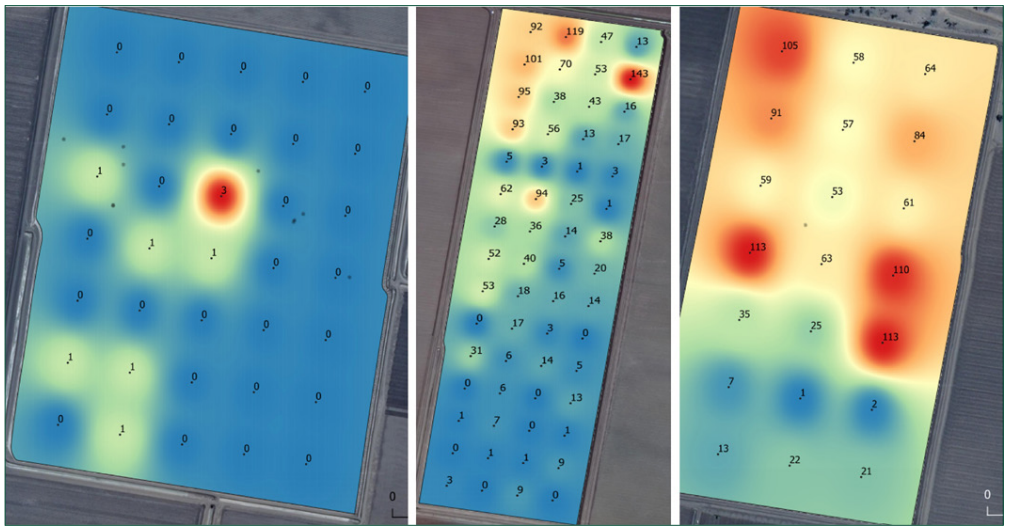

V.rank data for the 2022/23 season.
Variety Selection
Selecting the right variety is critical in achieving sustainable yields when Verticillium Wilt is present. The best Vrank varieties are Sicot 606B3F and Sicot 714B3F, with both showing high tolerance levels for Verticillium Wilt.
Crop Rotation
Dr Karen Kirby DPI, Dr Linda Smith QDPI, and Dr Linda Scheikowski QDPI have conducted research that shows that non host crops of Verticillium Wilt can reduce inoculum levels over a period of time. In the example below a rotation of sorghum/wheat and fallow over a three-year period dramatically impacted Verticillium Wilt inoculum levels in the soil.

Temperature Impacts
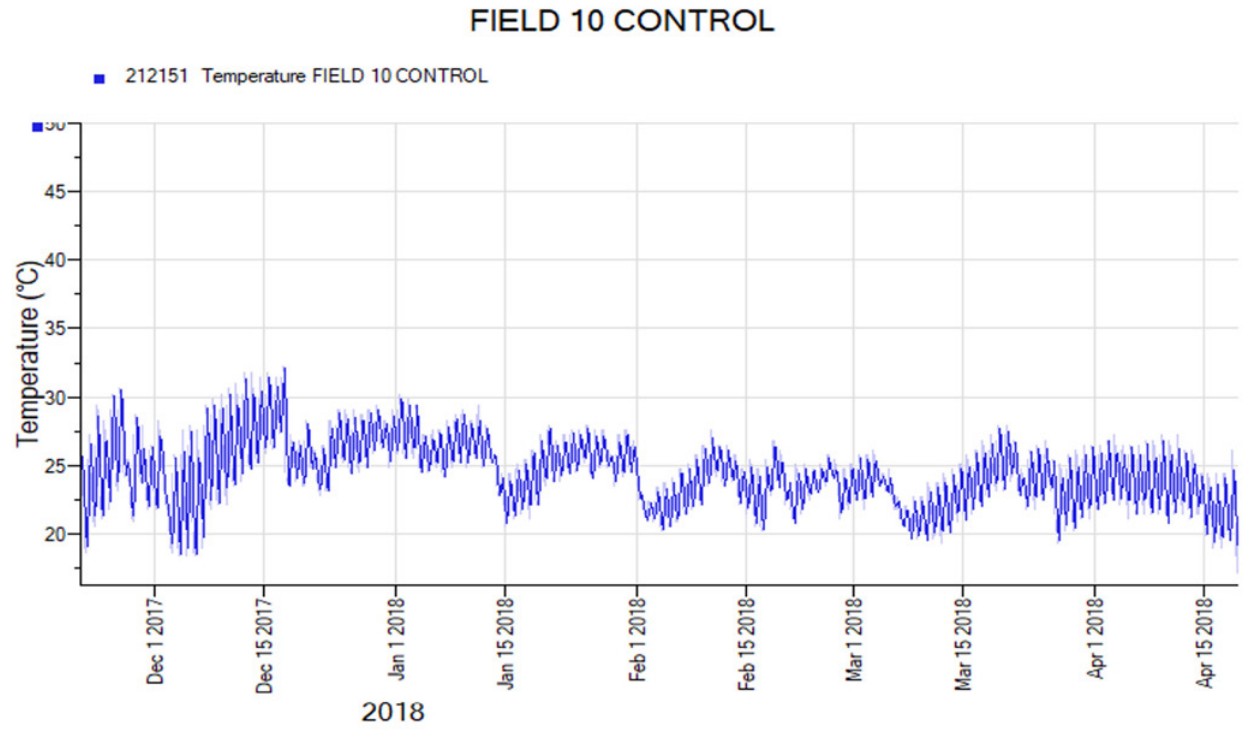
Temperature highly influences the occurrence and severity of Verticillium Wilt. Decreases in temperature during peak flowering or boll fill periods are more likely to impact yield but not necessarily disease incidence compared to temperature decreases later in the growing season.
Resistance levels of a variety are also drive by temperature. High Vrank varieties that show little disease incidence at 25°C–27°C can become more susceptible when temperatures drop to between 22°C and 20°C.
There are some key management decisions that can help minimise the impact of temperature on the uptake of Verticillium Wilt including:
- Utilising high soil beds as they warm up quicker than low formed beds
- Monitoring soil temperatures when irrigating at planting and first irrigation to ensure there are no significant temperature drops that may help the disease take hold at an early stage in the crop’s life
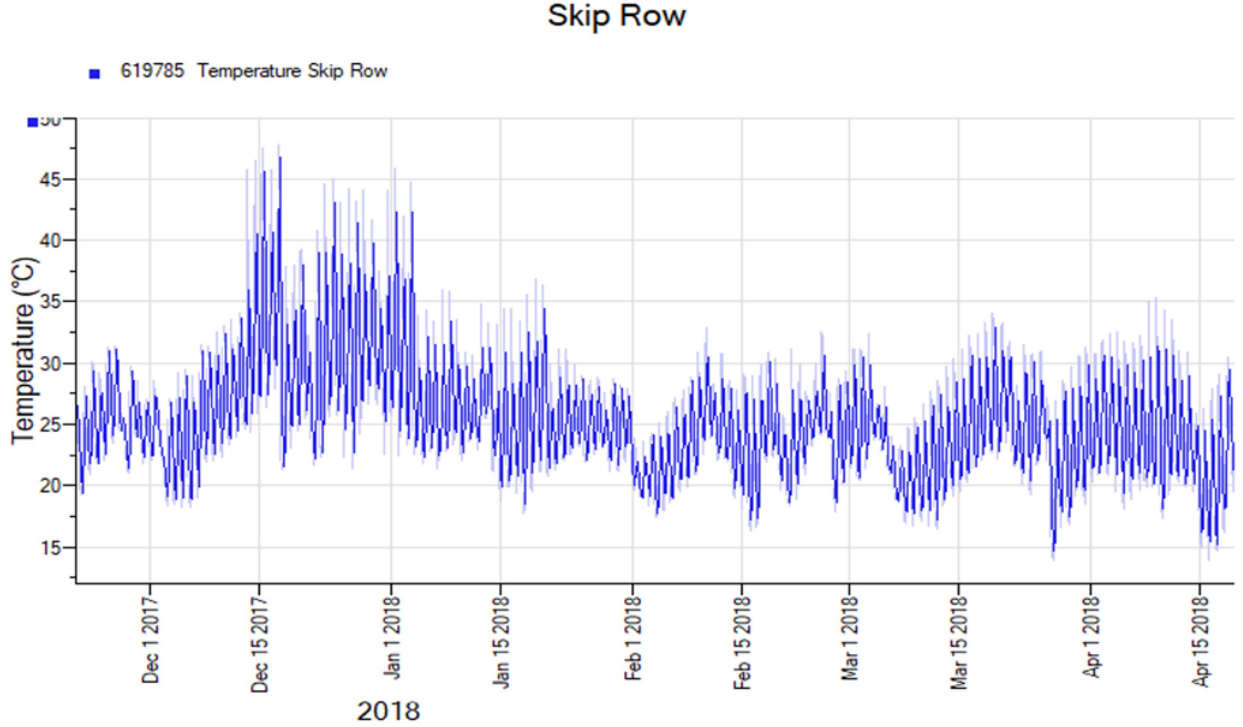
- Skip row cotton may help with reducing the uptake of the disease due to having increased radiation through the crop as seen in the temperature vs row spacing graph.
Irrigation Impacts
Low irrigation frequency typically means less incidence and impact of the disease. To the extent, there is very little disease incidence in rain grown cotton fields.
The relationship between soil temperature versus irrigations is well known with decreasing soil temps occurring with irrigations. Cooler wet and humid environments, as seen with lateral and pivot irrigation fields that are frequently watered, can increase disease development.
It is important to avoid applying cold water to fields early in the season where there is a known incidence of disease. Employing management techniques such as pre-irrigating and planting into moisture may help reduce Verticillium Wilt in the crop. It is also important to manage irrigation timing and find the balance between over irrigation and irrigating late. Stressed plants, due to late irrigation, will be more susceptible to disease.
Summary of controls for Verticillium Wilt
- Know your disease inoculum levels
- Select the most tolerant variety
- Have well developed and fine tilth fields that are preferably higher than normal/increasing soil temperatures
- Optimise nitrogen levels – do not over fertilize
- Plant as early as possible to develop an early maturing plant
- Develop a deep root system that penetrates below 15cm on both furrow and overhead irrigation
- Utilise products in season that can decrease the amount of microsclerotia going back into the soil
- Have a crop rotation with non-hosts of Verticillium Wilt
- Practice “Come Clean, Go Clean Practices”
And remember, “it is a balance between acceptable disease presence and economic sustainability”.
© Cotton Seed Distributors Ltd 2023. General guide only; not comprehensive or specific technical advice. Circumstances vary from farm to farm. To the fullest extent permitted by law, CSD expressly disclaims all liability for any loss or damage arising from reliance upon any information, statement or opinion in this document or from any errors or omissions in this document. Roundup Ready Flex®, Roundup Ready®, Bollgard II® and Bollgard® 3 are registered trademarks of Monsanto Technologies LLC, used under licence by Monsanto Australia Ltd. Insect control technology incorporated into these seeds is commercialised under a licence from Syngenta Crop Protection AG. Sicot, Sicala, Siokra and Sipima cotton varieties are a result of a joint venture research program, Cotton Breeding Australia, conducted by CSIRO and Cotton Seed Distributors Ltd (CSD). CSD is a partner in the CottonInfo joint venture, in partnership with Cotton Research Development Corporation and Cotton Australia.