
Field tested. Proven performance. Trusted to deliver.
The cotton industry is evolving – climate, market demand, management processes and technology advancements necessitate Australian growers and CSD to remain on the front foot, growing a high-quality product that’s sought after, sustainable and profitable.
That’s why we’ve invested in developing new varieties, built for the conditions you face. The Try Before You Buy trials arm you with local variety performance data and insights to help inform your on-farm decision making and plant new seed varieties with confidence.
2026 Season | Darling Down | Trial No. 2026070
Sicot 619B3XF, Siokra 253B3XF, Sicala 320B3XF & Sicot 743B3XF Try Before You Buy
‘Rose Park’, Chinchilla, QLD
Key takeaway
- Back-to-back cotton is possible but does pose risks such as lack of stubble cover for moisture retention.
- Sicala 320B3XF faired well for its first time in the region and it will be good to see how it fairs over a long-term basis in a dryland system
System
Dryland
Double skip
Rainfall
203mm
In crop rainfall
Top yield
3.53 b/ha
Sicala 320B3XF
Trial snapshot
| Trial No. | 2026070 |
| Planting date | 21 November 2025 |
| Picking date | 13 April 2026 |
| Previous crop | Cotton |
| Varieties | Sicot 619B3XF, Siokra 253B3XF, Sicala 320B3XF and Sicot 743B3XF |
Season & field summary
The trial was a back-to-back cotton field using varieties with XtendFlex® with the intention of using the technology to help control weeds. The season was mild in terms of temperature and was helped along by a good rainfall event just before first flower but did it tough after mid-January with little effective rainfall. Overall, a good result considering two cotton crops in a row and low soil moisture bank.
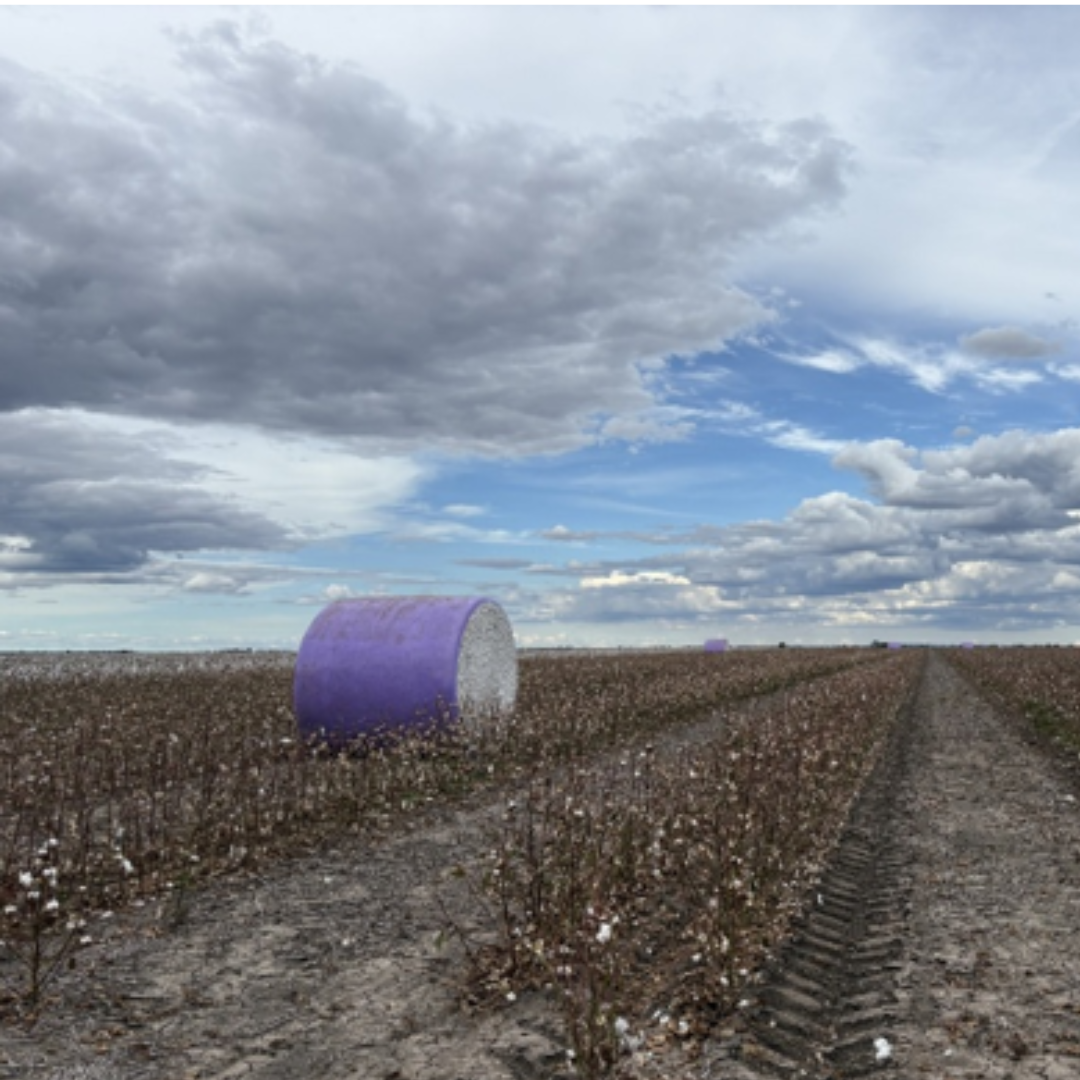
First plant we thought we were off to an early start with reasonable moisture but the following weeks were high temperatures and high wind, and establishment was far from ideal. Having a second chance in November we planted all varieties again. Siokra 253B3XF was planted last and should have been planted first into the best conditions. Sicot 619B3XF should have been planted last as it is a bit more forgiving as the moisture runs out. With no follow up rain after first flower it only had what was in the bucket to produce what it did, and hence the yields are a couple of bales under what they could have been had we had rain during flowering. I was pleasantly surprised with the results of Sicala 320B3XF as visually I could not see anything different between the varieties in the field.
Trial results
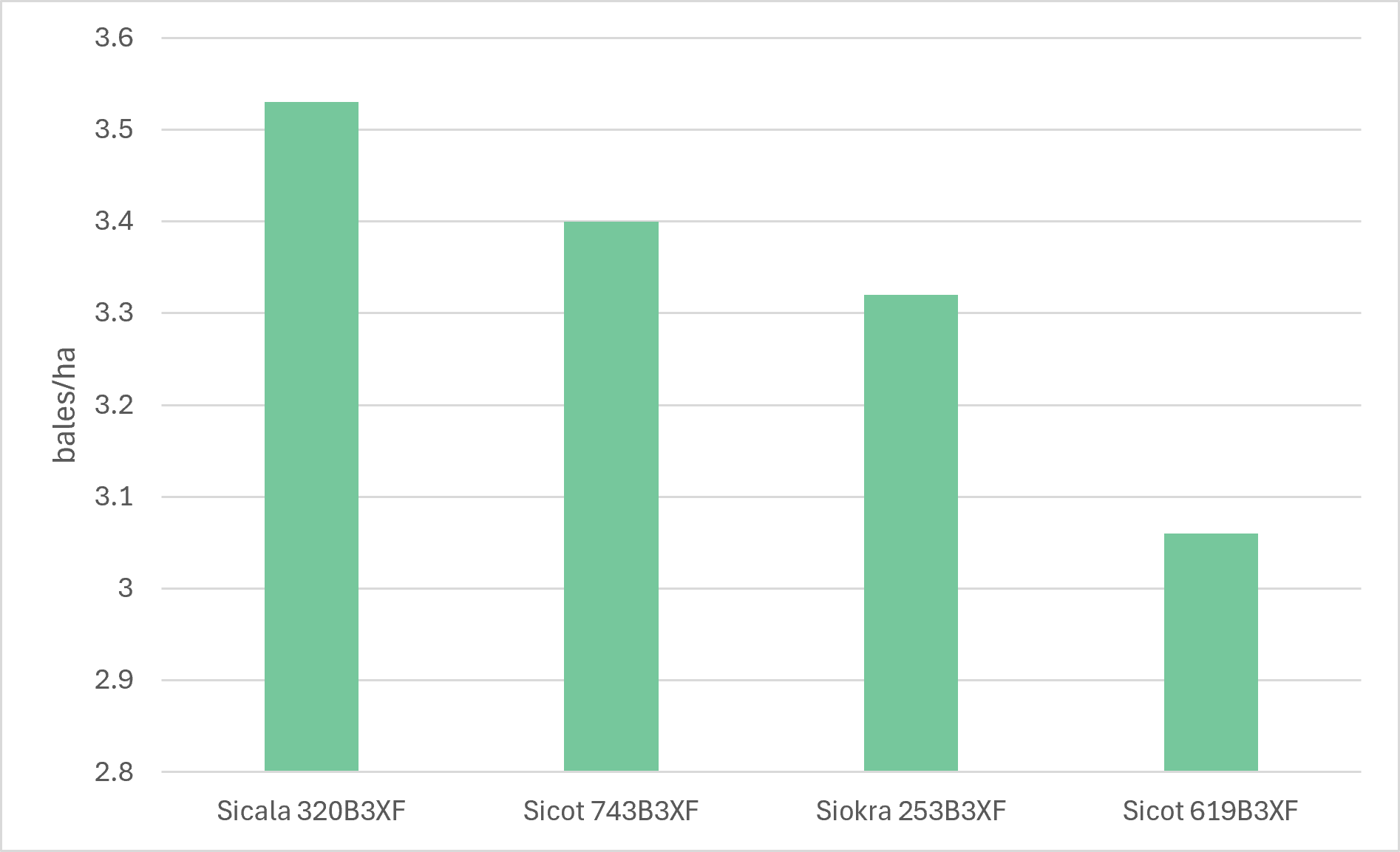
TBYB yield results from Greg Evans, ‘Rose Park’. Results are from OLAM QC, Dalby.
Yield & fibre quality comparison
| Variety | Yield | Staple length (imp) | Strength (g/tex) | Micronaire | Lint turnout (%) |
| Sicala 320B3XF | 3.53 | 1.19 | 35.7 | 3.9 | 44.2 |
| Sicot 743B3XF | 3.40 | 1.14 | 31.2 | 4.4 | 43.8 |
| Siokra 253B3XF | 3.32 | 1.14 | 34.0 | 3.9 | 44.1 |
| Sicot 619B3XF | 3.06 | 1.13 | 33.2 | 4.1 | 40.6 |
Agronomy insights
The crop was replanted after conditions following the initial plant turned very dry and windy. It was a back-to-back field as well, so there was no fallow period help preserve soil moisture. However, the second replant saw good emergence and it pushed flowering timing into a better position. Its first flower came mid-January when there was a period of good rainfall, which the crop had to rely on for the remainder of the season. Defoliation and picking went smoothly and the trial had overall decent yield and quality results across all varieties.
Fit & management considerations
There are good results this this trial for the Sicala 320B3XF in dryland. It both managed to top the yield but also maintained good quality which can often be a challenge in dryland conditions where water can’t be supplied at will. The Sicot 619B3XF does shine in establishment and it is possible if it was just itself in the field may not have needed to be replanted. However, it would have struggled to hold on until January rain. In the region where high micronaire isn’t uncommon having some naturally lower micronaire varieties in the program can spread risk.