Field tested. Proven performance. Trusted to deliver.
The cotton industry is evolving – climate, market demand, management processes and technology advancements necessitate Australian growers and CSD to remain on the front foot, growing a high-quality product that’s sought after, sustainable and profitable.
That’s why we’ve invested in developing new varieties, built for the conditions you face. The Try Before You Buy trials arm you with local variety performance data and insights to help inform your on-farm decision making and plant new seed varieties with confidence.
2026 Season | Lower Namoi | Trial No. 2026139
Siokra 253B3XF & Sicala 320B3XF Try Before You Buy
‘Mollee’, Wee Waa, NSW
Key takeaway
- Sicala 320B3XF showed strong early vigour, excellent fruit retention and high fruit set close to the main stem, maintaining a consistent boll load throughout the season.
- The trial highlighted that Sicala 320B3XF requires a different management approach to Siokra 253B3XF, with potential to benefit from less mepiquat, a longer season and tailored irrigation and defoliation strategies to maximise yield and
fibre quality.
System
Irrigated
Solid 1m
Rainfall
327mm
10 irrigations – 7.3ML
Top yield
14.50b/ha
Siokra 253B3XF
Trial snapshot
| Trial No. | 2026139 |
| Planting date | 7 October 2025 |
| Picking date | 5 April 2026 |
| Previous crop | Long fallow wheat |
| Varieties | Siokra 253B3XF & Sicala 320B3XF |
Season & field summary
The trial was planted on 7 October 2025 and picked on 5 April 2026, with excellent conditions during harvest allowing for efficient picking. The season started relatively cool before transitioning into a hot, dry summer, with the crop receiving 7.3 ML/ha of
irrigation throughout the season. A prolonged period of hot weather during January placed additional stress on the crop; however, the crop performed well despite these conditions. Insect pressure remained low throughout the season, with minimal pest
impacts observed.mage.
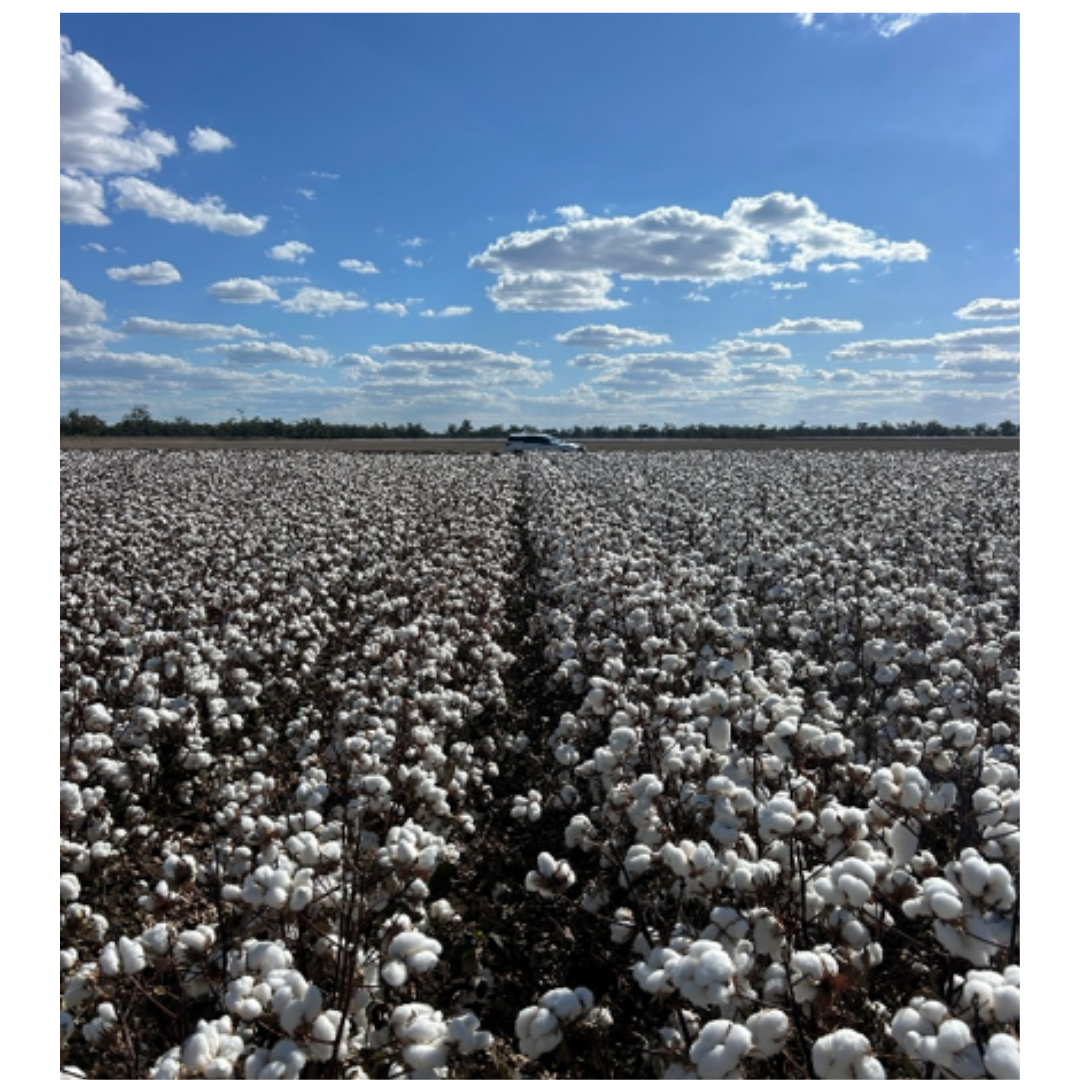
Sicala 320B3XF made a strong first impression with its early vigour and establishment, standing out against the adjacent Siokra 253B3XF. Throughout the season, I observed excellent fruit retention and fruit set close to the main stem, with the variety
maintaining a consistent boll load and picking cleanly at harvest. I believe the variety would benefit from being managed separately, as the trial area was largely managed to suit the surrounding Siokra 253B3XF. I felt Sicala 320B3XF may respond well to
a different management approach, particularly around growth regulation, irrigation scheduling and end-of-season timing. I was particularly impressed with the fibre quality, especially staple length and strength, and is keen to evaluate the variety further
under a dedicated management program next season. While there is still more to learn about its management, I see significant potential in Sicala 320B3XF and believe there may be additional yield to unlock with a variety-specific approach.
Trial results
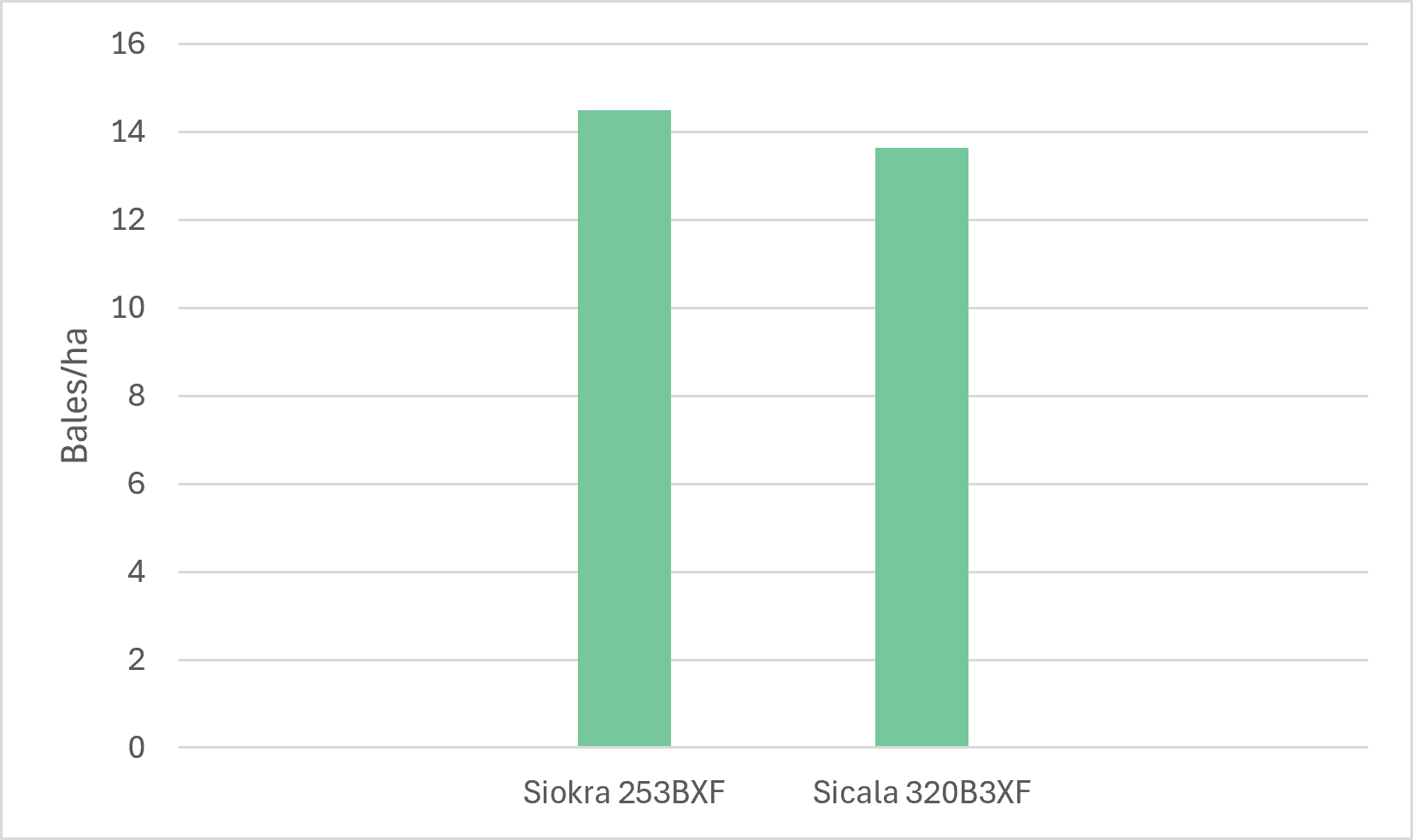
TBYB yield results from Matt Norrie, ‘Mollee’, Wee Waa. Results are from Commercial Gin.
Yield & fibre quality comparison
| Variety | Yield | Staple length (imp) | Strength (g/tex) | Micronaire | Lint turnout (%) |
| Siokra 253B3XF | 14.50 | 1.19 | 31.3 | 4 | 43.46 |
| Sicala 320B3XF | 13.64 | 1.26 | 34.5 | 4.2 | 45.20 |
Agronomy insights
The trial highlighted distinct management differences between Sicala 320B3XF and Siokra 253B3XF, despite both being grown under the same commercial program. Sicala 320B3XF expressed strong fruit retention and favourable fibre quality characteristics, suggesting it may be better suited to a less aggressive mepiquat program and a longer-season management approach.
Fit & management considerations
- Sicala 320B3XF appears to fit well within irrigated cotton systems, particularly where management can be tailored to the variety.
- Observations from this trial suggest opportunities to optimise performance through a different approach to mepiquat, irrigation and defoliation management.
- Strong early vigour, excellent fruit retention, clean picking and favourable fibre quality indicate the variety has significant potential.
- While there is still plenty to learn about its management, Sicala 320B3XF is showing great promise as a valuable addition to local cotton production systems.