Field tested. Proven performance. Trusted to deliver.
The cotton industry is evolving – climate, market demand, management processes and technology advancements necessitate Australian growers and CSD to remain on the front foot, growing a high-quality product that’s sought after, sustainable and profitable.
That’s why we’ve invested in developing new varieties, built for the conditions you face. The Try Before You Buy trials arm you with local variety performance data and insights to help inform your on-farm decision making and plant new seed varieties with confidence.
2026 Season | Darling Downs | Trial No. 2026058
Sicot 606B3F & Sicala 320B3XF Try Before You Buy
‘Lakeland Downs’, Condamine, QLD
Key takeaway
Sicot 606B3F and Sicala 320B3XF performed equally well under high rainfall conditions after defoliation.
System
Irrigated
Solid 1m
Rainfall
232mm
8 irrigations
Top yield
15.8b/ha
Sicala 320B3XF
Trial snapshot
| Trial No. | 2026058 |
| Planting date | 18 October 2025 |
| Picking date | 15 April 2026 |
| Previous crop | Long fallow cotton |
| Varieties | Sicot 606B3F & Sicala 320B3XF |
Season & field summary
The trial was planted into a good conditions following long fallow cotton. Season conditions were positive early on with reasonable establishment across both varieties. March saw an unfortunate rain event following defoliation likely heavily impacting yield through tight lock and boll rot.
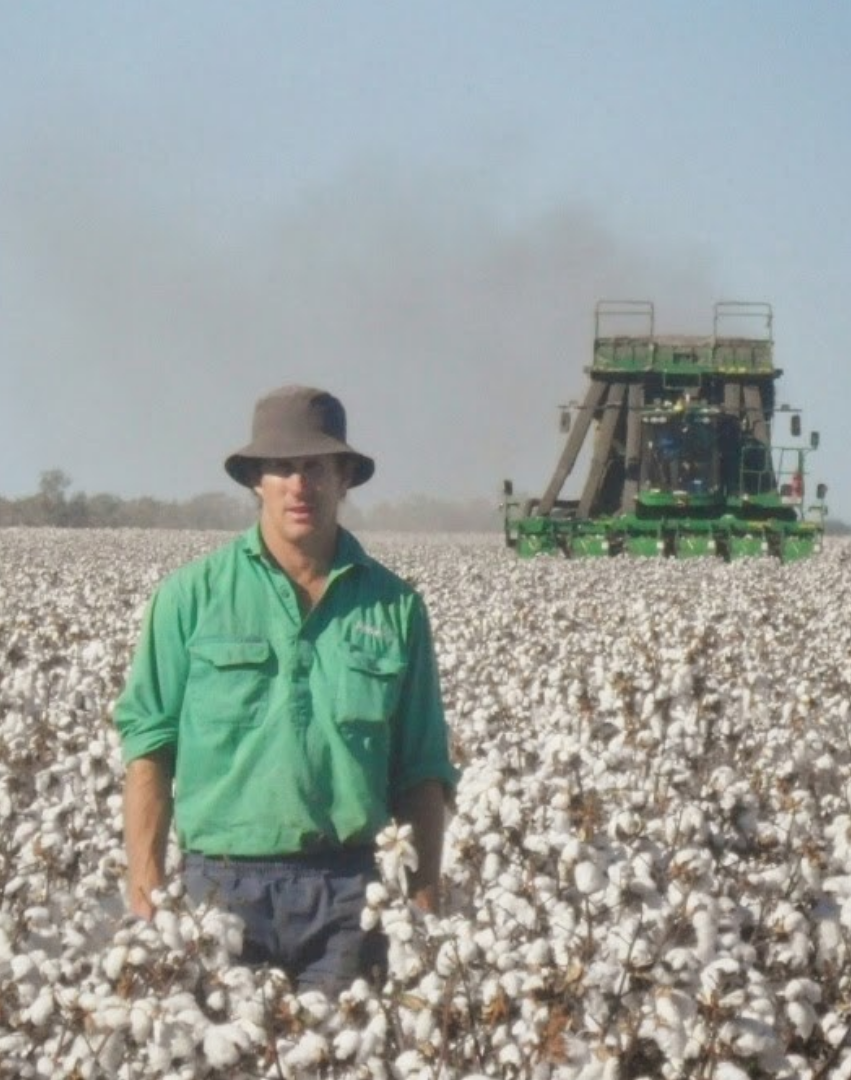
Jason Sinclair, ‘Lakeland Downs’, Condamine QLD
Establishment was slightly improved for Sicala 320B3XF over the Sicot 606B3F. Overall, Sicala 320B3XF was less vigorous across the season than the Sicot 606B3F, however it did grow slightly taller, with less nodes. This field was well watered so the crop remained stress free for the most part. The boll counts end of season were both very similar, with Sicala 320B3XF having a slight edge over the Sicot 606B3F. It was evident through the season that the Sicot 606B3F retained a higher percentage of fruit, as its boll load at flowering/boll fill was higher and the 606 came in quicker than Sicala 320B3XF. Sicala 320B3XF retained vegetative biomass and was the latest part of the field to come in.
There were no significant management differences between the two varieties. Maybe, to reduce overall plant height, we could have increased RX rate or number of applications to even up with the remainder of the field. Quality for this variety seems very premium and the number of age of the bolls retained I think reflect this. The very low seed density would indicate this variety may cause trouble emerging in poorly prepped/harder soil types, so ideally we’d limit this variety to the premium country. Yields stood very similar to Sicot 606B3F in the end (slightly less than the field average), and the premium nature of the fibre is a big plus for full irrigated cotton. It would appear this variety may not be best suited for dryland paddocks, harder country or limited irrigation scenarios. The disease package for verticillium on recent CSD ratings also doesn’t appear as promising as other varieties
Trial results
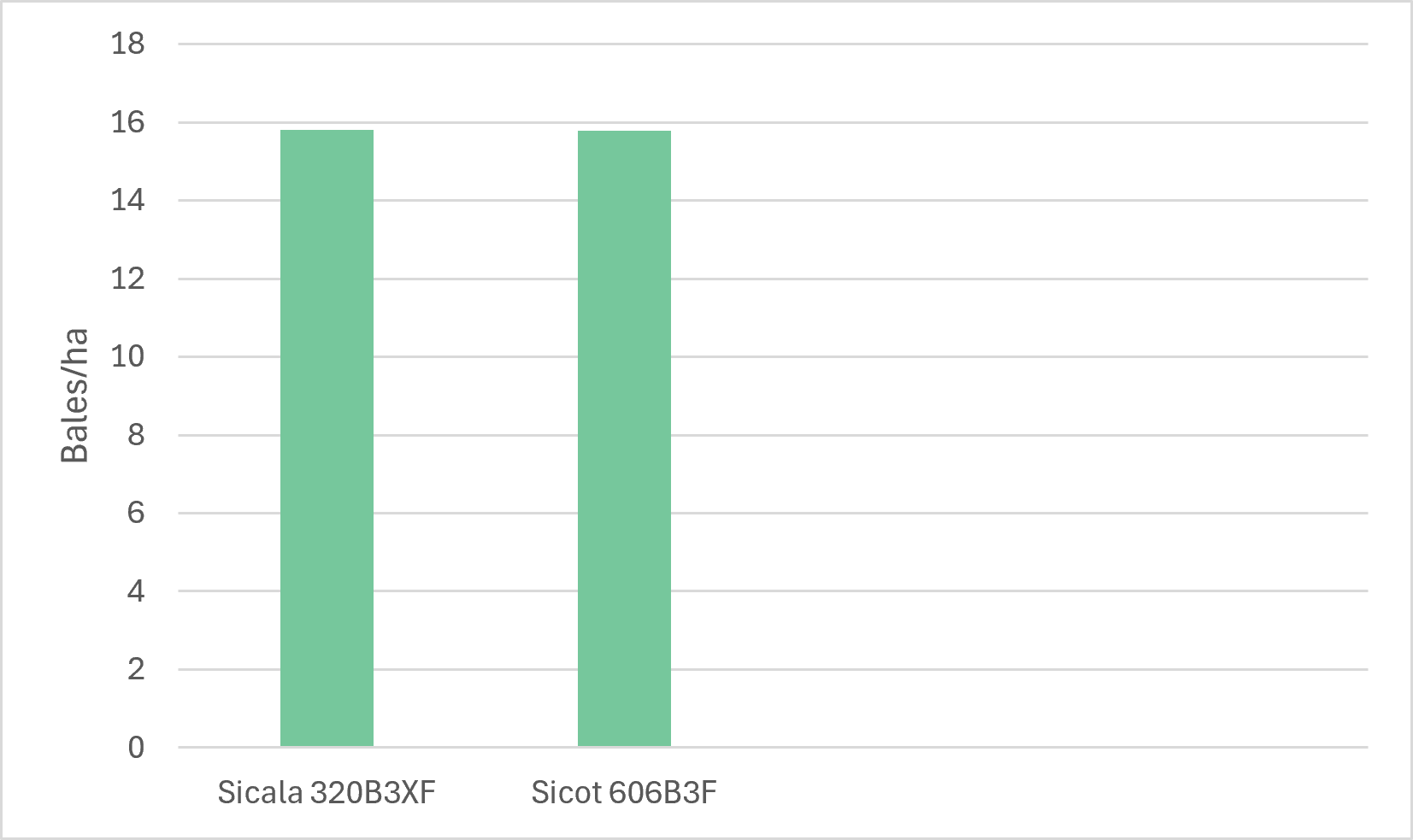
TBYB yield results from Jason Sinclair, Condamine. Results are from LDC, Dalby.
Yield & fibre quality comparison
| Variety | Yield | Staple length (imp) | Strength (g/tex) | Micronaire | Lint turnout (%) |
| Sicala 320B3XF | 15.80 | 1.25 | 33.5 | 4.5 | 44.9 |
| Sicot 606B3F | 15.78 | 1.23 | 33.9 | 4.9 | 42.7 |
Agronomy insights
Throughout the season the crop recieved a total of eight irrigations at 4.8ML/ha and an effective rainfall total of 232mm. The field had a total of two mirid sprays and one whitefly spray. A mepiquat application of 62ml/ha was applied at flowering. The Sicala 320B3XF finished with approximately 10 more bolls/m and the crop was defoliated on the 6th of March and required three defoliations.
Fit & management considerations
Sicala 320B3XF has proved high preforming in areas on the Downs with full irrigation. The variety, in this case produced the same yield as a comparison to Sicot 606BF and demonstrated a higher turnout under poor finishing conditions due to rainfall.