
Season Management Based on Challenging Establishment
Cold establishment periods provide many challenges for the cotton grower and consultant from a management perspective. Establishing enough plants and keeping those plants alive until the season warms up involves many management decisions and factors to consider when making these decisions.
CSD tools CottonTracka® and Day Degree Calculator (DDC) are two useful tools that track season conditions at each stage of growth, visually displaying how the climate is progressing in your region. For example, figure 1 uses the DDC to look at the historical 1532 accumulation during the establishment period for Coleambally.
Abiotic and biotic seasonal influences that can affect crop growth include:
- Daily minimum and maximum temperatures.
- Days to emergence (average temperature).
- Length of control from planting insecticides.
- Pest populations.
- Irrigation.
- Rainfall and cloud cover.
- Disease – Rhizoctonia, Black Root Rot, Altenaria.
Average temperature is defined as the sum of the maximum and minimum divided by half for a period of 24 hours. A reduction of daily average temperature can exacerbate the presence of soil borne disease such as rhizoctonia and black root rot. This can have negative influence on plant vigor and overall growth rates, particularly node production due to the root structures being inhibited by disease.
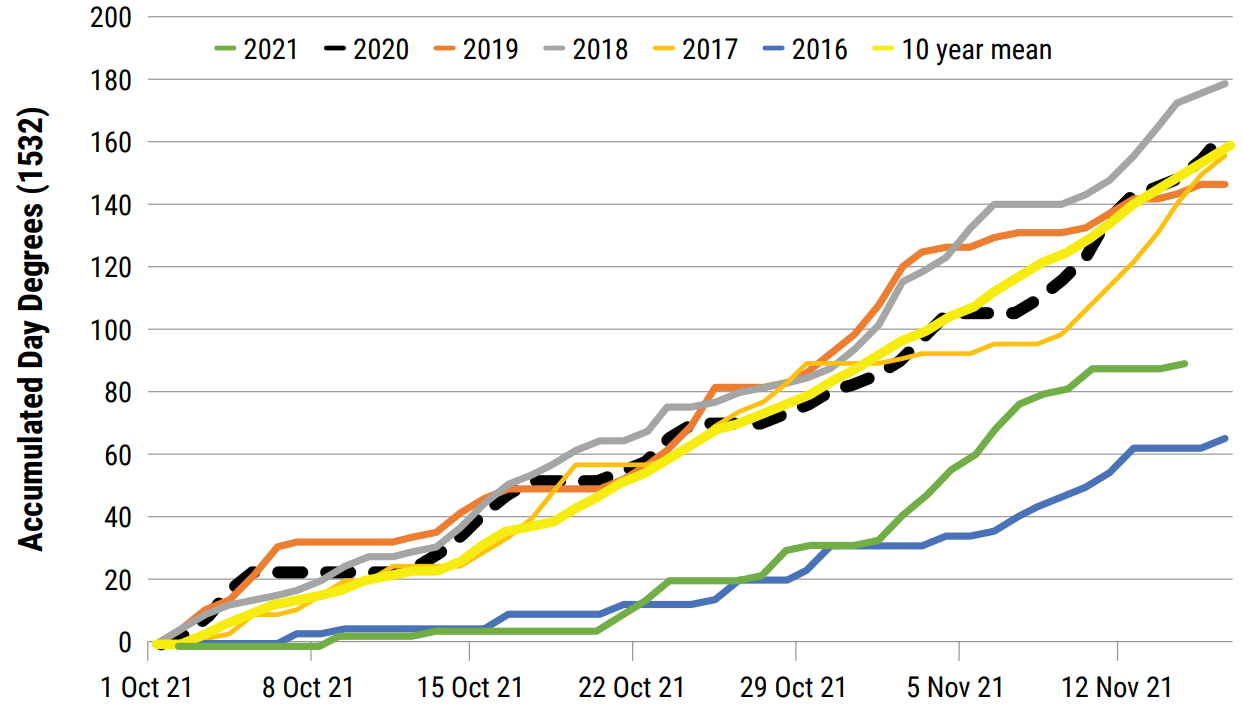
Figure 1: Accumulated Day Degree 1532 for Coleambally from 1st October to 14th November
PEST POPULATIONS
Below ideal growing conditions results in plants producing minimal growth as a direct result from temperature. While the plant sits in cold conditions, growers and consultants are faced with the prospect of having to protect a small plant, primarily focusing on the terminal for when favourable conditions eventually prevail. The use of insecticide and fungicide during early season conditions is often timed with the first in-crop herbicide. Even with low pest and disease presence, there is value to protect the slow growing plant until conditions are favourable.
Early season stress can encourage:
Later initiation of first fruiting position (Figure 2)
Delay in days to first flower.
Higher retention threshold.
To help track your crop’s progression check out CottonTracka.
Cold temperatures during the establishment period can influence the timing of first square production and time to first flower. Delay in average temperature in the lead up to first square will encourage growers to run a higher retention leading up to and during first flower, to make up for lost time during challenging establishment periods.
Maximising days of flowering is important in Central and Southern NSW. In cold seasons, first flower is often delayed due to low average temperature. Unfortunately due to the location of these regions, season length is not abundant. Therefore, late flowering crops cannot be matured during ‘late season’ as the climate historically does not prevail.
Pushing crops to flower past 10-15th of February in these regions comes at a yield and quality risk. Flowers that occur on or past the 10-15th February are candidates for immature fruit. These late position bolls are factored into defoliation decisions and as a result can introduce very low quality lint into the sample. Furthermore, minimal yield is attributed to these late flowering bolls due to lack of season length to fill and mature these late flowers.
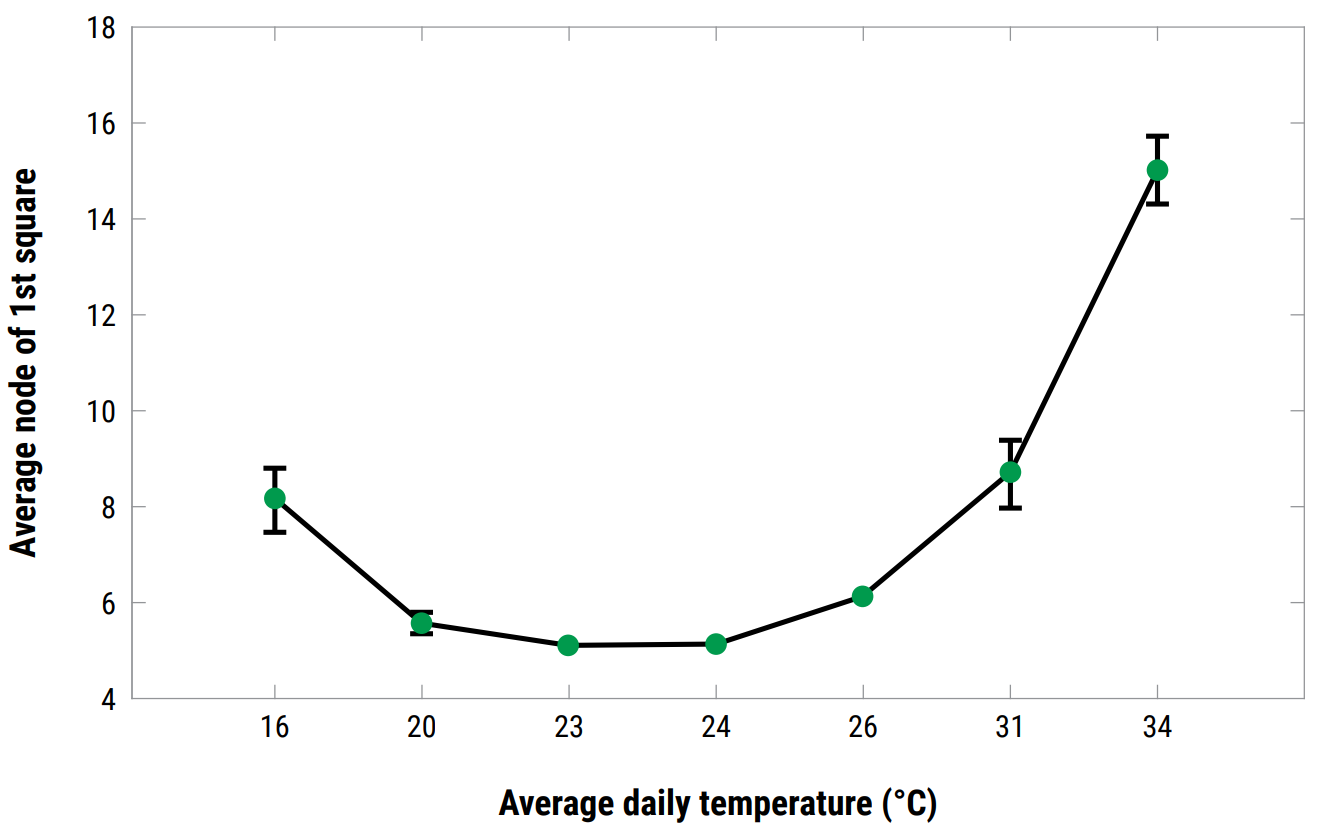
Figure 2: Average temperature and effect on position of node of 1st fruiting branch.
MANAGEMENT CONSIDERATIONS
With a challenging start to the season, yield expectations need to be managed accordingly. When lowering yield expectations consider reducing fertiliser inputs to the adjusted expectation. Utilising petiole sampling leading into first flower is one method to moderate fertiliser applications by determining the overall health of the developing plant leading into first flower, traditionally when last in-crop fertiliser applications are made.
Considering the pre-plant nutrient levels and the applied pre-plant fertiliser. Petiole testing across multiple dates prior to first flower and during flowering can assist in the decision making when adjusting fertiliser inputs for a lower yield potential – costs can be saved by using this strategic management decision.
SUMMARY
- Adjusting pest thresholds based on weather conditions
- Protecting the terminal for when the season does prevail.
- Delayed First Flower. Adjusting yield expectations.
- Reduction of days flowering – impacting yield potential.
- Cut out date – significance.
© Cotton Seed Distributors Ltd 2022. General guide only; not comprehensive or specific technical advice. Circumstances vary from farm to farm. To the fullest extent permitted by law, CSD expressly disclaims all liability for any loss or damage arising from reliance upon any information, statement or opinion in this document or from any errors or omissions in this document. Roundup Ready Flex®, Roundup Ready®, Bollgard II® and Bollgard® 3 are registered trademarks of Monsanto Technologies LLC, used under licence by Monsanto Australia Ltd. Insect control technology incorporated into these seeds is commercialised under a licence from Syngenta Crop Protection AG. Sicot, Sicala, Siokra and Sipima cotton varieties are a result of a joint venture research program, Cotton Breeding Australia, conducted by CSIRO and Cotton Seed Distributors Ltd (CSD). CSD is a partner in the CottonInfo joint venture, in partnership with Cotton Research Development Corporation and Cotton Australia.