
Seed Processing and Quality Assurance
CSD has a commitment to quality which is focussed on the needs of the Australian cotton grower. To meet this commitment, CSD produces and tests all seed to internationally accepted protocols, which measure seed quality and purity.
CSD’s Quality Assurance (QA) procedures touch every facet of the seed production process from grower selection, through planting, growing, harvesting, ginning, delinting and treating of the finished product. All possible steps are taken at every stage of the seed production process to ensure that the finished product is of the highest quality.7
As the success of a cotton crop depends largely on the quality of the seed which is sown, the importance of these procedures are paramount in ensuring the highest quality seed is a available to the grower.
To ensure that seed meets market requirements, all seed is produced and tested under internationally accepted protocols such as the OECD Seed Scheme for field certification and ISTA/AOSA for seed testing.
SEED INCREASE PROGRAM (OECD SEED SCHEME)
The objective of the OECD Schemes for the varietal certification of seed is to encourage the use of seed of consistently high quality in participating countries.
The OECD Cotton Certification Scheme in Australia is based on a limited generation scheme. The important feature in this scheme is that a limit is placed on the number of generations that can be produced from the breeders original selection of a variety (typically three generations before germplasm is renewed). This reduces the risk of factors such as genetic shift within a variety and varietal contamination with off-types.
All of CSD’s varieties are produced to OECD certification standards. All CSD seed crops are independently audited each season to verify that they meet OECD certification standards.
During the season all contracted seed crops are inspected a minimum of four times to ensure the genetic and trait purity of the seed produced from the seed crop. In addition to these inspections all equipment associated with planting, picking, transport and ginning are also inspected by CSD’s Seed Increase team prior to being used in relation to the seed crops.
The area of seed crops contracted by CSD each season always aims to supply the industry’s needs, assuming a full water plant the following season.
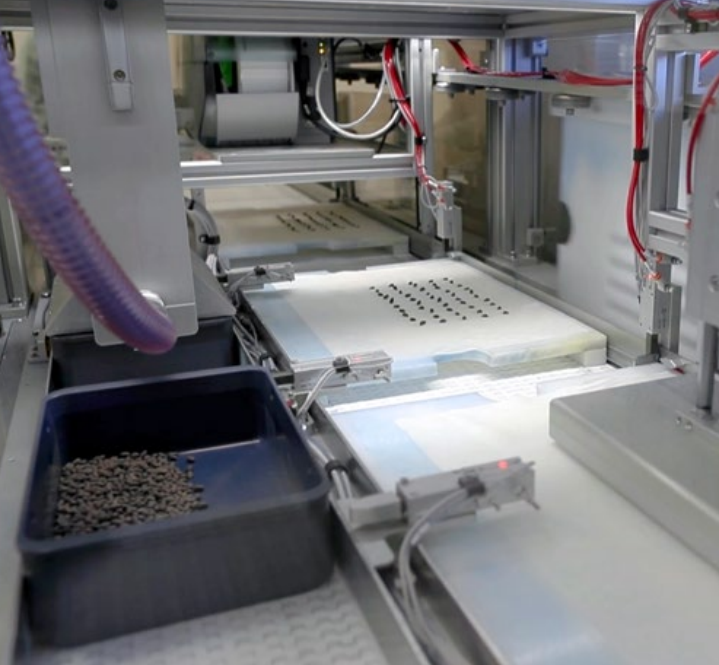
CSD’s co-developed seed placing device is the first of its kind in the world. It far exceeds the level of automation and efficiency of any other method for conducting between
paper seed germinations.

Germination testing at CSD is conducted under the rules for seed testing of the International Seed Testing Association and the Association Official Seed Analysis.
SEED TESTING
The methods and standards set by CSD for seed testing are in excess of those laid down by ISTA/AOSA. Both AOSA (Association of Official Seed Analysts) and ISTA (International Seed Testing Association) aim to provide standard procedures for sampling and seed testing.
The main seed quality tests of seed lots include warm germination (cyclic 20°C for 8 hours and 30°C for 16 hours), cool germination (constant 18°C), mechanical damage, seed purity, seeds per kilogram and genetic purity.
Throughout the seed production process there are over 50 QA checks or tests carried out on each seed lot, with a minimum of four germination tests at various stages of the process.
© Cotton Seed Distributors Ltd 2022. General guide only; not comprehensive or specific technical advice. Circumstances vary from farm to farm. To the fullest extent permitted by law, CSD expressly disclaims all liability for any loss or damage arising from reliance upon any information, statement or opinion in this document or from any errors or omissions in this document. Roundup Ready Flex®, Roundup Ready®, Bollgard II® and Bollgard® 3 are registered trademarks of Monsanto Technologies LLC, used under licence by Monsanto Australia Ltd. Insect control technology incorporated into these seeds is commercialised under a licence from Syngenta Crop Protection AG. Sicot, Sicala, Siokra and Sipima cotton varieties are a result of a joint venture research program, Cotton Breeding Australia, conducted by CSIRO and Cotton Seed Distributors Ltd (CSD). CSD is a partner in the CottonInfo joint venture, in partnership with Cotton Research Development Corporation and Cotton Australia.