
The Importance of First Irrigation
First irrigation timing plays an important role by encouraging expansion and exploration of the cotton root system. This season is a stark contrast to last with the majority of crops experiencing little to no rainfall since planting. The dry conditions may result in an earlier than normal first irrigation, making the timing even more important in setting the crop up for success.
A delay at first irrigation will place the plant under stress, which will subsequently impact on the performance of the crop. Work carried out by CSIRO’s Steve Yeates and Dirk Richards has shown that stress in the lead up to flowering period can result in a dramatic decrease on the crops yield potential (Figure 1).
Segmented picking of this trial had also shown that the plant had great difficulty recovering from this stress even after irrigation management returned to optimal. As Table 1 shows, although the two treatments had very similar total boll numbers, boll weights were considerably affected. In fact, the boll weight throughout the entire plant did not recover from this early season stress, although fibre length did recover once normal irrigation resumed.
Although missing the entire first irrigation is not a real world example, mistiming the first irrigation will adversely affect the crop. As the fruit load and therefore nutritional and water requirements for Bollgard® 3 (with its high fruit retention) versus conventional cotton differ, slight delays in the timing of the first irrigation can affect the yield potential.
| Control | Missed First Irrigation | |
| Yield | 11.0 | 9.30 |
| Boll Number | 121.8 | 120.7 |
| Lint Weight | 2.04 | 1.75 |
Table 1: Segmented picking yield components results from the irrigation trial conducted by Yeates 2005-06.

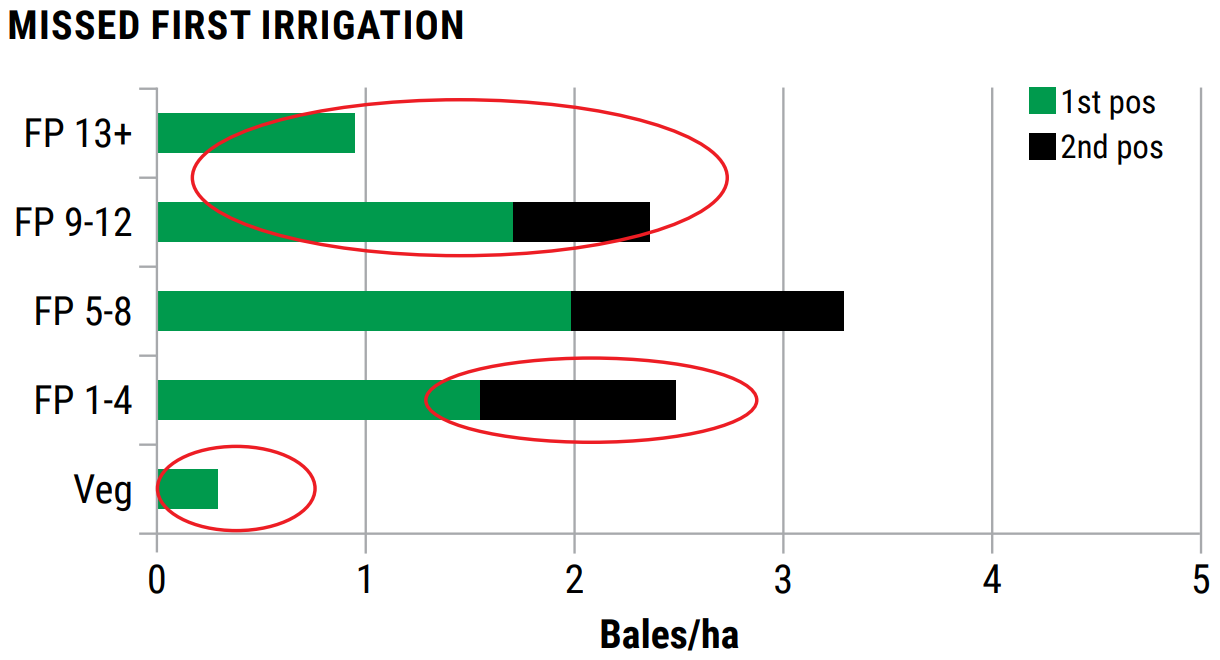
Figure 1: Yield segments for irrigation trial conducted by Yeates, 2005-06.
TIMING OF FIRST IRRIGATION
The importance of first irrigation is emphasised around timing. This timing decision can be made by regularly monitoring soil moisture where developing roots are present and predicting the likely length of time the soil moisture will last prior to first irrigation. The first irrigation sets up the crop leading into flowering by developing a healthy root system and canopy, and in many cases will be the only irrigation for some cotton crops. There are a number of factors that must be considered when determining when to apply your first irrigation, including:
- Current plant available water.
- Weather forecast.
- Crop growth stage.
It is extremely important to monitor these factors to get the most out of the first irrigation whilst avoiding moisture stress. In seasons with lower water availability, water needs to be used where this risk of yield loss is at its highest, with plant water use being at its highest between 80-120 days after planting. During this period of peak to late
flowering the crops had the potential to lose 2.7% of yield for every day of moisture stress, as shown in Table 2.
| Past Conventional* | High Fruit Retention Bollgard® Cotton** | |
| Squaring | 0.8 | 1.10 |
| Peak Flowering | 1.6 | 1.70 |
| Late Flowering | 1.4 | 2.70 |
| Boll Maturation | 0.3 | 0.69 |
Table 2: Yield loss (%) per day of water stress (extraction of > 60% plant available water content). Source: Yeates et al. 2010#; Hearn and Constable 1984*.
In seasons where water availability isn’t a significant limitation, the first irrigation is utilised to set up the crop coming into the flowering period. At first flower the aim is to have a healthy actively growing plant with a suitable architecture to develop a boll load. Depending upon region, flowering typically occurs around 60 – 90 DAP or approximately 920 day degrees (base 12) or 584 day degrees when using the new DD1532 method. Aiming for 8 nodes above white flower (NAWF) at first flower is a good benchmark to ensure that your crop is healthy and has the architecture to carry a high yielding boll load.
CSD’s STEFF® (Simulated Time to Estimated First Flower) is an excellent tool to utilise when considering the timing of first irrigation.
COTTON YARNS
Last season Angus caught up with agronomist Dean Hamblin. Dean & Angus discussed some of the decision making process around the timing of first irrigation and its importance in setting your crop up for first flower.
While this chat discusses a lot of the seasonality concerns for last season there are still some great general tips and advice included.
© Cotton Seed Distributors Ltd 2022. General guide only; not comprehensive or specific technical advice. Circumstances vary from farm to farm. To the fullest extent permitted by law, CSD expressly disclaims all liability for any loss or damage arising from reliance upon any information, statement or opinion in this document or from any errors or omissions in this document. Roundup Ready Flex®, Roundup Ready®, Bollgard II® and Bollgard® 3 are registered trademarks of Monsanto Technologies LLC, used under licence by Monsanto Australia Ltd. Insect control technology incorporated into these seeds is commercialised under a licence from Syngenta Crop Protection AG. Sicot, Sicala, Siokra and Sipima cotton varieties are a result of a joint venture research program, Cotton Breeding Australia, conducted by CSIRO and Cotton Seed Distributors Ltd (CSD). CSD is a partner in the CottonInfo joint venture, in partnership with Cotton Research Development Corporation and Cotton Australia.