
Late Plant Options
RELATIVE POTENTIAL YIELDS
When making a late plant or replant decision, it is important to consider the likely yield potential of the late-planted crop.
Considerations for replant:
- Potential crop yield of existing plant stand vs potential crop yield of replant plant stand (potentially relevant after heavy rainfall events).
- Additional resources required to grow crops i.e. soil water and nitrogen application.
- Potential returns from alternative crops.
- Or cost of maintaining the fallow.
The CSD replant calculator can assist decision making, the FastStartTM Cotton POP app (downloadable from the app store), can be used for a quick assessment of plant stand variability. CSD has developed the first flower calculator, Stimulated Time to Estimated First Flower (STEFF), that can be used to predict the date of first flower and assist in management decisions.
The late planted crop can present many agronomic and pest management difficulties for growers and consultants. Crop agronomy must account for the reduced season length to complete fibre maturity and boll opening before first frost. Late season insect control can be difficult and costly due to resistance and the relative attractiveness of
late cotton crops to Helicoverpa, mites, aphids and whitefly.
For areas where season length is short, you will need to stick to your last effective flowering date so you don’t attract potential discounts due to fibre quality concerns. CSD’s suite of tools, including STEFF, can assist in this decision making process by assessing if you have adequate time to grow a successful crop in your region.
LATE PLANT VARIETIES
There are several important factors that should be considered when making varietal selections for late-planted situations.
- Some varieties are more responsive to management for earliness, so will accumulate fruit earlier than indeterminant varieties. Speak to your local CSD E&D agronomist for which varieties best suit your region.
- Boll load of late planted crops will be filling (and fibre maturing) during cooler than average weather. Last season many crops failed to mature fully which resulted in significant quality discounts.
- Late planted crops with excessive vegetative growth may lead to issues with management of late season insects.
- Crops maturing under cooler conditions may be at increased risk to various plant diseases.
- Late maturating crops may be predisposed to defoliation issues.
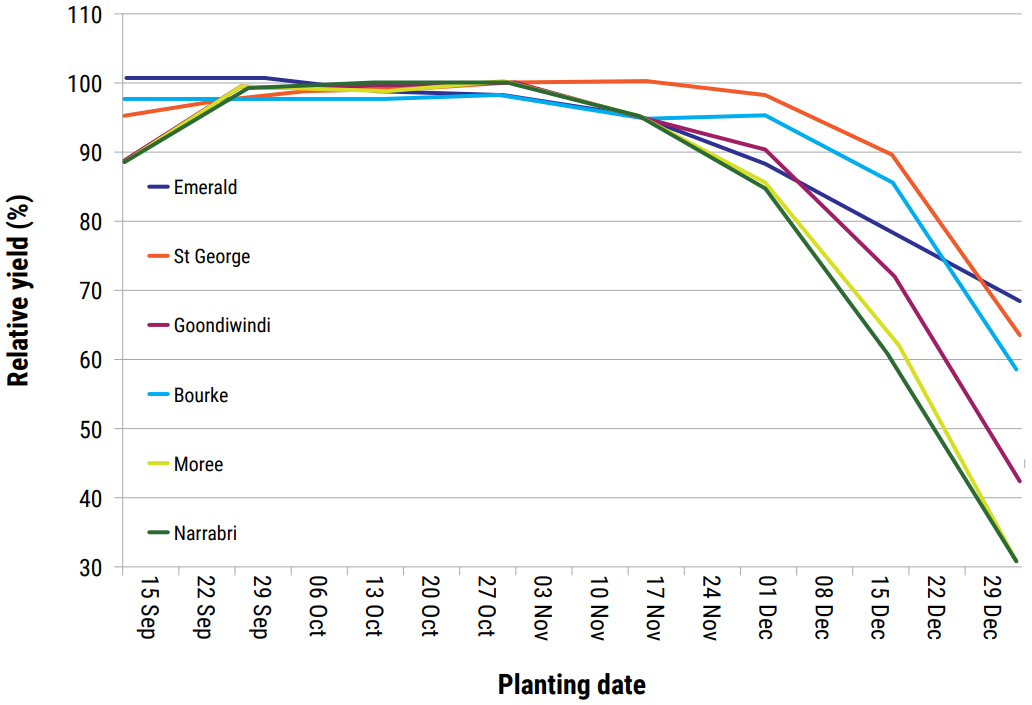

Figure 1: Yield potential by sowing date for Australian irrigated cotton growing regions. Data generated by Michael Bange, CSIRO using the OZCOT model.
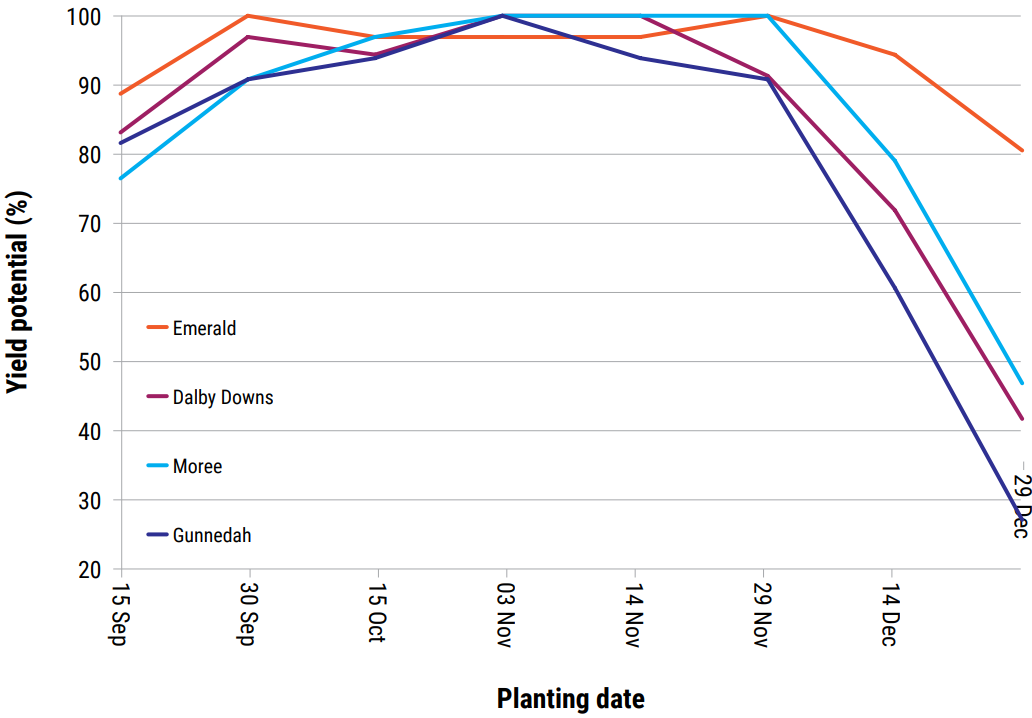
Figure 2: Yield potential by sowing date for Australian dryland cotton growing regions. Data generated by Michael Bange, CSIRO using the OZCOT model.
© Cotton Seed Distributors Ltd 2022. General guide only; not comprehensive or specific technical advice. Circumstances vary from farm to farm. To the fullest extent permitted by law, CSD expressly disclaims all liability for any loss or damage arising from reliance upon any information, statement or opinion in this document or from any errors or omissions in this document. Roundup Ready Flex®, Roundup Ready®, Bollgard II® and Bollgard® 3 are registered trademarks of Monsanto Technologies LLC, used under licence by Monsanto Australia Ltd. Insect control technology incorporated into these seeds is commercialised under a licence from Syngenta Crop Protection AG. Sicot, Sicala, Siokra and Sipima cotton varieties are a result of a joint venture research program, Cotton Breeding Australia, conducted by CSIRO and Cotton Seed Distributors Ltd (CSD). CSD is a partner in the CottonInfo joint venture, in partnership with Cotton Research Development Corporation and Cotton Australia.