

Paul Kahl (left) and Frank Hadley.

Aerial view of ‘Shenstone’, Wee Waa in 1983.

John Grellman is elected Chair of the CSD Board in 1997.

CSD Farm Field Day at Little Mollee.

James Kahl is elected Chair of the CSD Board in 2008.

Aerial view of ‘Shenstone’, Wee Waa in 2018.
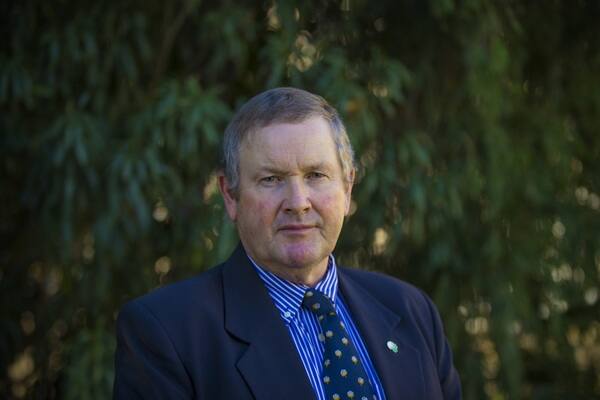
Tony Quigley is elected Chair of the CSD Board in 2022.
First accordian - leave hidden
1967 - 1989
1967
Formation of Cotton Seed Distributors Ltd (CSD) on 5 April, 1967. The inaugural members of CSD are accepted and Frank Hadley is elected Chair of the CSD Board.
1968
Richard Williams is elected Chair of the CSD Board.
1971
Commencement of CSD’s relationship with CSIRO, through the significant financial investment towards the formation of a National Cotton Research Centre (which later became the Australian Cotton Research Institute).
1973
- CSD hosts its first entomology seminar with international speakers.
- CSD assists in the establishment and funding of Australian Cotton Growers Research Committee.
1980
- Introduction of Sicot varieties.
- CSD is a foundation sponsor of the first Australian Cotton Conference.
1983
CSD completes relocation and officially opens ‘Shenstone’, Wee Waa.
1985
Release of the first Siokra variety (also the first bacterial blight resistant variety).
1987
CSD enters in an agreement with CSIRO to be the exclusive agent for the domestic marketing of their varieties.
1989
- Richard Williams steps down as Chair of the CSD Board after 21 years, and is replaced by Frank Hadley.
- CSD holds its first round of grower information meetings.
1990 - 1999
1990
- Partnership with CSIRO agreement on variety supplies.
- Deltapine varieties moved to Pioneer HiBred Australia.
- CSD commences publishing the results of the Annual Disease Surveys.
1993
CSD tackles plant disease with the release of two cotton varieties (Siokra V15 and Sicala V-2) bred for their improved tolerance to Verticillium wilt.
1994
Cotton Seed International formed in order to pursue the protection of CSIRO varieties overseas.
1995
First international sale of bulk seed.
1996
- CSD varieties containing the first generation of transgenic insect control, Ingard®, are commercially released in Australia.
- CSD integrates the Extension and Develoment team to support Australian cotton growers.
1997
- John Grellman is elected Chair of the CSD Board.
- CSD overhauls seed processing to enhance precision of supply and quality assurance.
1999
CSD employs Dr Stephen Allen and he immediately is seconded to the CSIRO Cotton Breeding Team as a visiting scientist based at ACRI.
2000 - 2009
2001
- CSD purchases Little Mollee a 460ha property on Culgoora Road, Wee Waa.
- CSD varieties containing the Group M herbicide tolerance trait, Roundup Ready®, are released for commercial use in Australia.
2002
CSD releases Sicot 71, the first in a family of varieties combining wide regional adaptation, high yield, good fibre quality and high disease tolerance.
2003
- CSD varieties containing the second generation of transgenic insect control technology, Bollgard II®, are released for commercial use inAustralia.
- Sicot 71BR is released.
2007
- CSD varieties containing the Group N herbicide tolerance trait, Liberty Link®, are released for commercial use in Australia.
- Cotton Breeding Australia is formed by CSIRO and CSD.
- CSD and Syngenta release Bion seed treatment offered to combat BRR/FOV.
2008
James Kahl is elected Chair of the CSD Board.
2009
CSD variety Sicot 71BRF is released , a variety with high yield potential and broad adaptability to the Australian cotton industry. It goes on to become the predominant variety in Australia commanding over 70% of the market in 2013/14 season.
2010 - 2019
2010
- Record planting of 599,630ha of cotton, and production at almost four million bales.
- CSD purchases ‘Westella’, an 157ha neighbouring property to ‘Little Mollee’.
2011
- CSD variety Sicot 74BRF is released, a variety with very high yield potential, broad adaptability which saw it command over 70% market share in 2013/14.
- The Australian cotton industry produces 5 million bales on the back of a new record planting of 621,460Ha.
2012
- CSIRO and CSD announce a five-year $35m extension to their existing agreement.
- CSD, CRDC and Cotton Australia launch a joint extension program, CottonInfo.
2013
CSIRO analysis shows industry yield improvements of 1b/ha/decade.
2014
- CSD develop 2020 Strategic Plan to achieve the vision of a 2 bale/ha yield improvement, while enhancing current fibre quality.
- CSD initiates the Ambassador Network to look at management technologies and crop metrics to improve yield.
2015
CSD purchased ‘Wild Willows’, 480ha of adjoining country to ‘Westella’ and ‘Little Mollee’. The properties are consolidated and irrigation infrastructure to create ‘CSD Farms’.
2016
- CSD varieties containing the third generation of transgenic insect control, Bollgard® 3, are released for commercial use in Australia, making up 95% of the Australian crop in its first season.
- The industry records its second highest planting on record, approximately 460,000 hectares.
2017
CSD Celebrates 50 Years with a Gala dinner and celebration on-site in Warehouse 5.
2018
- CSD officially opens new seed production facilities at ‘Shenstone’, Wee Waa.
- Cotton Breeding Australia partnership between CSD and CSIRO is extended to 2029.
- CSD releases a variety in Sicot 620 which has resistance to Cotton Bunchy Top disease.
2019
CSD variety Sicot 606B3F is released, although originally bred for Southern NSW, it’s yield potential and broad adaptability sees it dominate seed sales reaching approximately 40% market share.
2020 - Present
2020
- CSD continues to supply planting seed to the industry through the COVID pandemic and associated lockdowns and boarder disruptions.
- CSD embarks on the second iteration of 5-year strategic plans by Growing the Australian cotton crop through innovative solutions beyond seed.
2022
- Tony Quigley is elected as Chair of the CSD Board.
- CSD sell a it highest amount of planting seed at 8,436 tonne, which corresponded to a planting area of 681,700ha and the Australian cotton industry produced in excess of 5.8 million bales.
2023
- Dr Ian Taylor commences as CSD CEO.
- CSD and CSIRO announce an extension to the Joint Venture partnership ‘Cotton Breeding Australia’ till 2034.
2024
CSD varieties containing the XtendFlex herbicide platform are released for commercial use in Australia. Allowing for greater flexibility in weed management with the ability for over-the-top applications of Glyphosate, Dicamba and Gluphosinate ammonium herbicides.
2025
CSD embarks on the third iteration of 5-year strategic plan – focusing on being a leading seed and technology company, enabling Australian growers to produce the most desirable, profitable and sustainable cotton.
CSD Honorary Members
At CSD’s Annual General Meeting, respected figures who have played a key role in strengthening the performance, resilience and reputation of Australia’s cotton sector are inducted as CSD Honorary Members.
The accolade formally recognises their passion, foresight, dedication and contribution to making CSD the organisation it is today.